Scientific breakthrough has made what sounds impossible into reality: pulling clean drinking water straight from desert air using nothing but sunlight. This revolutionary atmospheric water generation technology is designed for anyone facing water scarcity—from rural communities without infrastructure to off-grid homeowners seeking water independence.
MIT and UC Berkeley researchers have developed solar-powered devices that harvest moisture from air with humidity as low as 10%, producing liters of pure water daily even in bone-dry conditions. We’ll explore how these MIT water harvester systems actually work using special materials called metal-organic frameworks, examine real-world applications that could transform lives in drought-stricken regions, and look at the future of water independence technology that could make communities completely self-sustaining.
This isn’t science fiction—it’s happening right now, and it might just solve one of humanity’s most pressing challenges.
The Global Water Crisis Demands Revolutionary Solutions
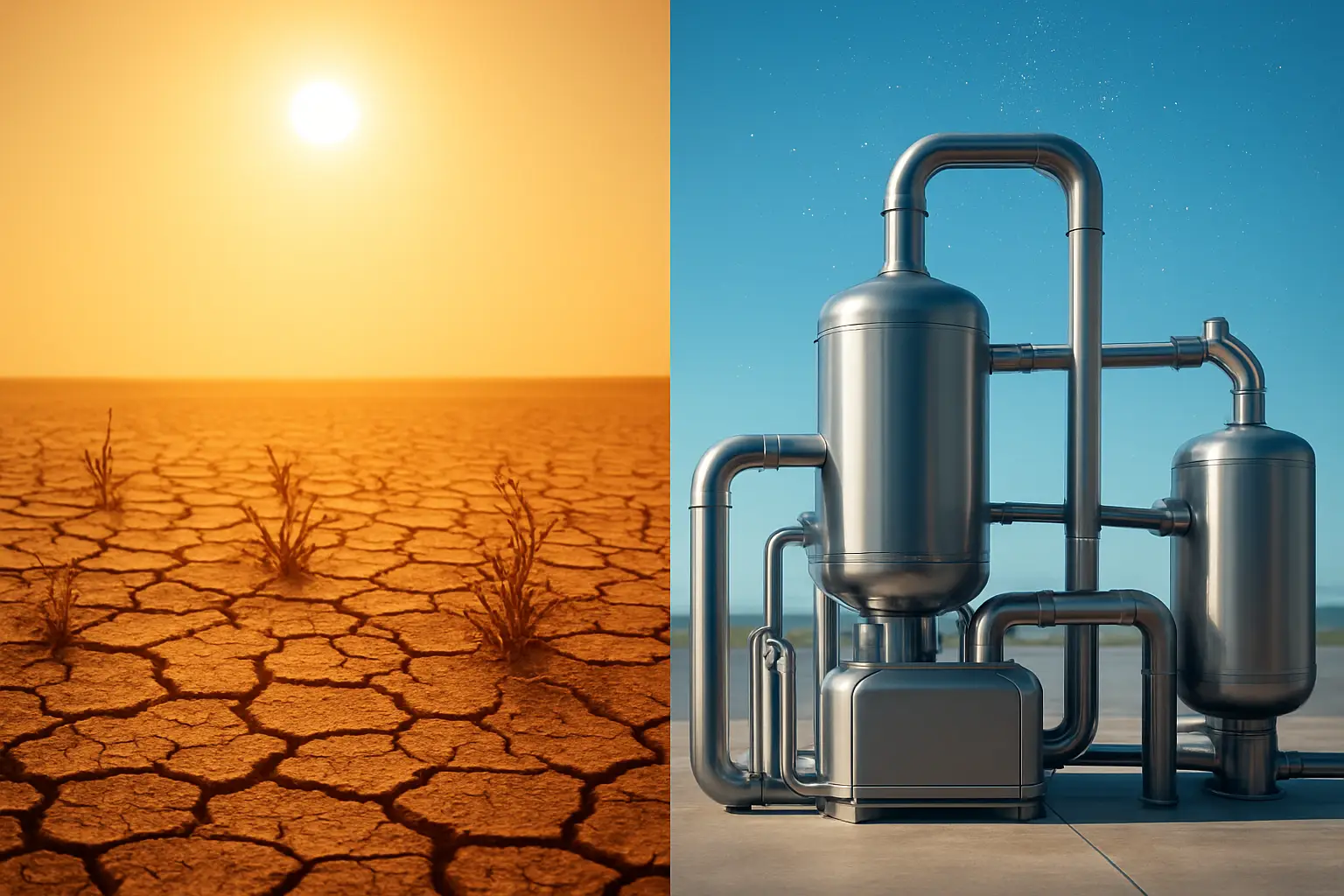
Over 2 billion people live in water-stressed areas worldwide
The global water crisis has reached unprecedented levels, with more than 2 billion people worldwide currently living in areas experiencing severe water stress. This staggering figure represents nearly one-quarter of the world’s population facing daily challenges in accessing clean, safe drinking water. Atmospheric water generation and clean drinking water solutions have become critical technologies for addressing this massive humanitarian challenge.
Climate change intensifies water scarcity through increased evaporation
Climate change dramatically worsens existing water scarcity conditions through a destructive cycle of increased heat and evaporation. More heat leads to accelerated evaporation rates, which directly results in diminished surface water availability across affected regions. Traditional infrastructure struggles to adapt to these rapidly changing environmental conditions, making water scarcity solutions and sustainable water sources more essential than ever.
Traditional water solutions are expensive and infrastructure-dependent
Conventional approaches to water access, including digging wells, implementing expensive and energy-hungry desalination systems, or constructing extensive piping networks from distant water sources, all share a common limitation: heavy dependence on complex infrastructure. These traditional methods require substantial upfront investments, ongoing maintenance, and established utility networks that many water-stressed regions simply cannot support or afford.
Desert regions need water sources that work in extreme conditions
Desert environments present unique challenges for water access, yet even in these seemingly impossible conditions, the air retains trace amounts of water vapor that can be harvested. Air to water systems and water from air technology offer revolutionary potential for these bone-dry regions, where traditional water sources are virtually nonexistent and water independence technology becomes a matter of survival rather than convenience.
How MIT and UC Berkeley’s Water Harvesters Actually Work

MOFs absorb water vapor from air during nighttime hours
The revolutionary atmospheric water generation technology relies on Metal-Organic Frameworks (MOFs) that function as molecular sponges during cooler nighttime temperatures. These specialized materials efficiently capture water vapor molecules directly from ambient air, even in extremely arid environments where traditional water sources are scarce.
Solar energy heats the materials during daylight to release trapped water
When daylight arrives, MIT water harvester systems utilize solar energy to heat the MOF materials, triggering the release of previously trapped water vapor. This water from air technology creates a sustainable cycle that requires no external power source, making it ideal for remote locations lacking electrical infrastructure.
Water vapor condenses into clean, drinkable liquid through the system
The released water vapor undergoes condensation within the atmospheric water harvesting device, transforming into clean, drinkable liquid water. This air to water systems process ensures the harvested water meets drinking water standards without requiring additional filtration or purification steps.
Prototypes produce nearly one cup of water daily in desert conditions
Field testing in Arizona has demonstrated remarkable results, with prototypes successfully producing nearly one cup of water per day in harsh desert-like conditions. This breakthrough represents a significant advancement in clean drinking water solutions for water-scarce regions worldwide.
Real-World Applications That Could Transform Lives
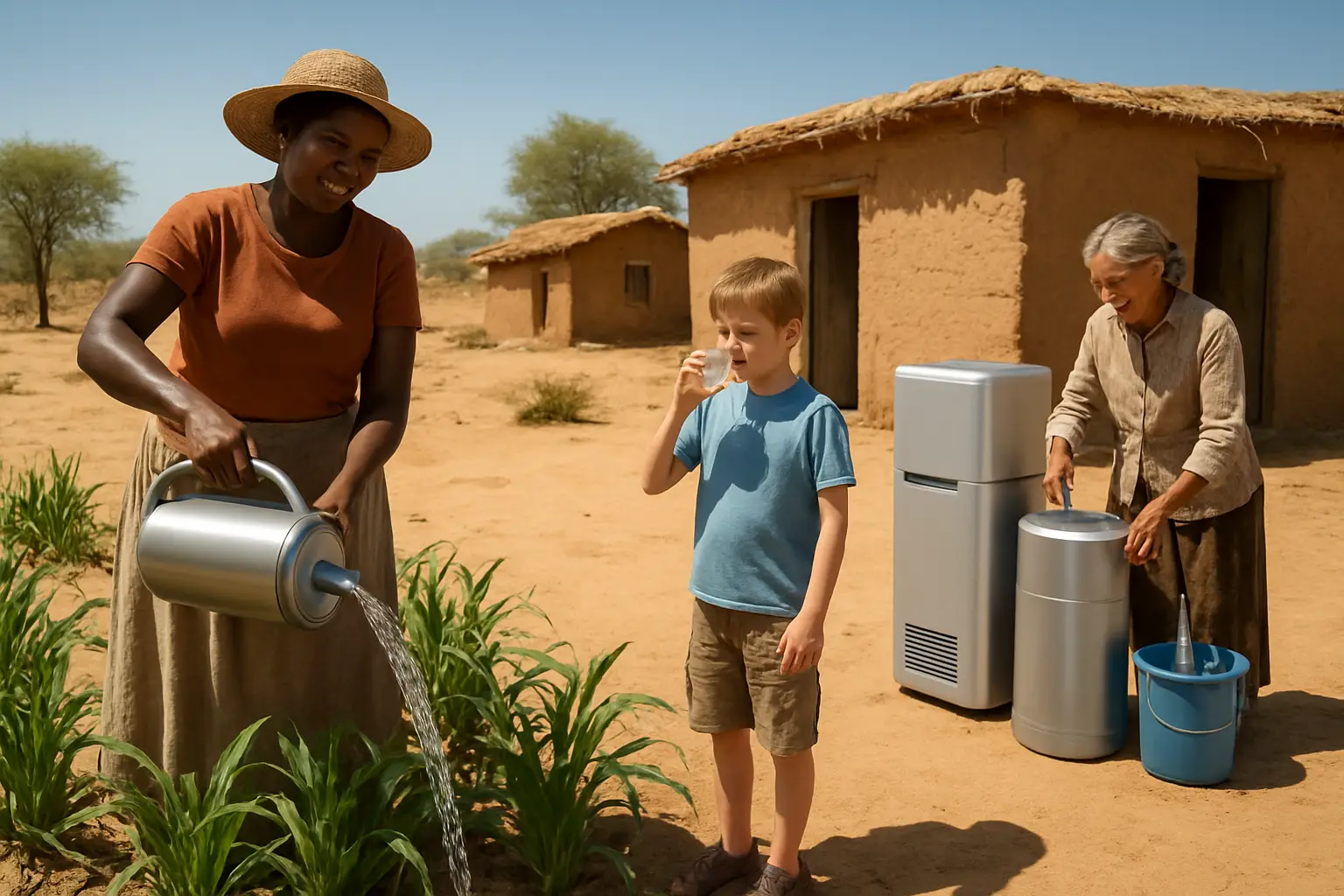
Rural Villages and Emergency Response Applications
Rural villages without existing infrastructure could gain sustainable, local water sources by deploying solar-powered atmospheric water generation systems. These air to water systems eliminate the need for costly infrastructure investments while providing clean drinking water solutions directly from ambient humidity.
Emergency response teams could utilize portable, self-sustaining water systems in disaster zones such as wildfires, earthquakes, or floods. Off-grid homes could achieve complete water independence, eliminating reliance on wells or expensive water deliveries, while NASA is closely monitoring this water from air technology for space exploration, envisioning atmospheric water harvesting on Mars or the Moon for astronaut hydration.
The Future of Water Independence and Self-Sustaining Communities

The Future of Water Independence and Self-Sustaining Communities
The integration of atmospheric water generation with solar panels creates unprecedented opportunities for fully autonomous water systems, particularly transformative for off-grid living scenarios. This water independence technology enables communities to break free from traditional water infrastructure dependencies while maintaining sustainable water sources through innovative air to water systems.
Urban environments stand to benefit significantly as rooftop installations could generate clean drinking water for entire apartment complexes and buildings. Desert regions, previously challenged by water scarcity, become increasingly habitable with reliable atmospheric water harvesting systems that scale seamlessly from individual homes to larger residential developments, fundamentally reshaping how we approach water security in challenging environments.

The technology to harvest clean water from thin air represents more than just scientific innovation—it’s a beacon of hope for the billions facing water scarcity worldwide. From MIT’s solar-powered MOF systems working in desert conditions to UC Berkeley’s box-like devices producing cups of water daily, these breakthroughs prove that water independence is no longer science fiction. The applications span from emergency disaster relief and rural communities without infrastructure to off-grid homes and even future space exploration missions.
While current costs remain high and production is still limited, the potential for transformation is undeniable. As manufacturing scales up and costs decrease, atmospheric water harvesting could revolutionize how we think about water security. The future may well belong to self-sustaining communities that pull their daily hydration needs straight from the air around them, turning our atmosphere into humanity’s most abundant water source.